The Attachment We Were Made For
Why your brain — and God — won't settle for a screen
A recent survey found that nearly 40% of teenagers have now turned to an AI chatbot for emotional support or companionship. Not for homework help. Not for trivia. For comfort. For someone — something — to talk to when the day fell apart.
I don't think that statistic should surprise us, and I don't think it should just alarm us either. It should make us curious. Because underneath it is a question every counselor eventually has to sit with: what is the human brain actually looking for when it reaches for connection, and can a device ever give it that?
What the Brain Is Actually Asking For
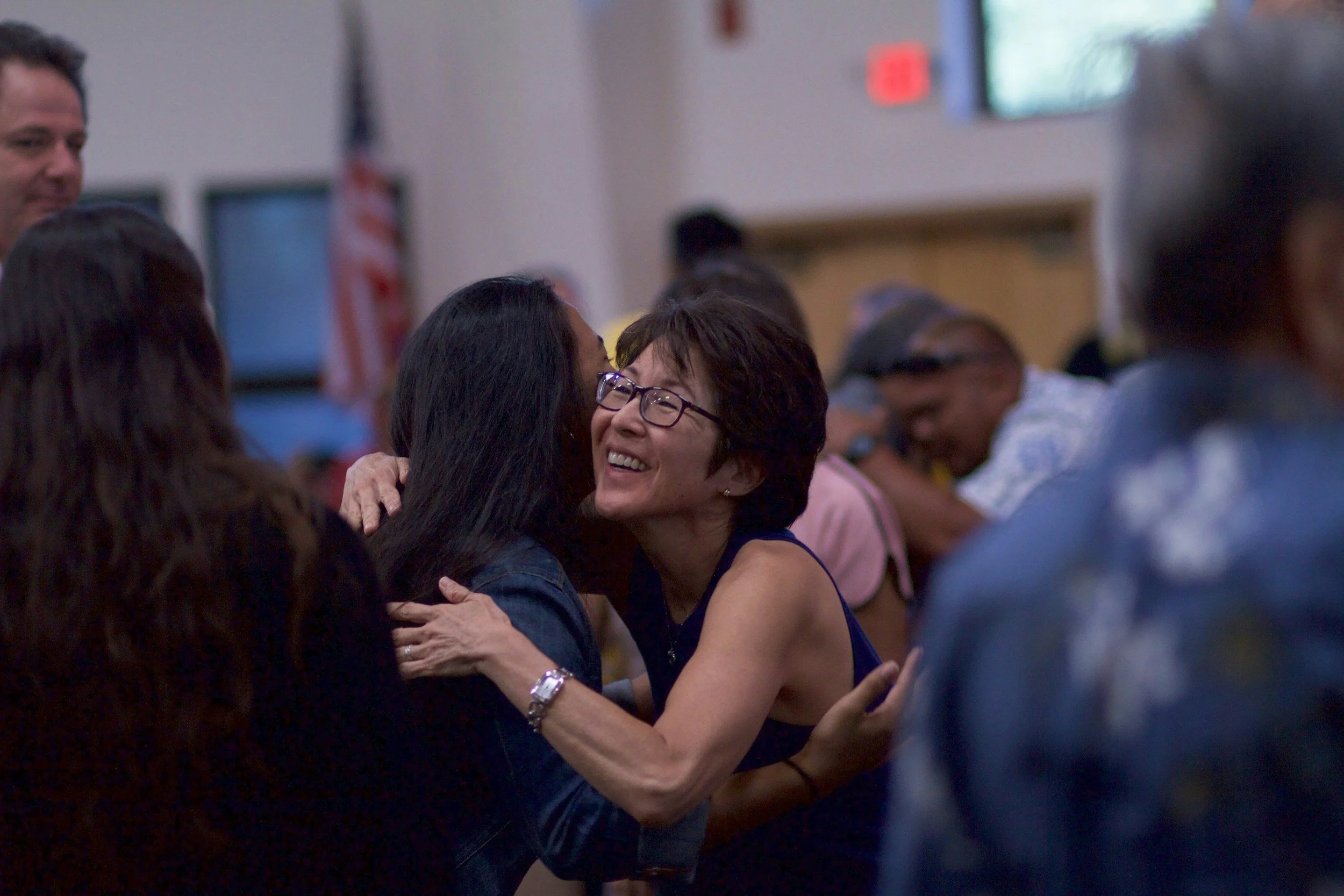
Attachment isn't a preference. It's architecture. From the moment we're born, our nervous system is scanning for a face — a real one, with a pulse behind it — that can regulate our distress simply by being present to it. This isn't sentiment; it's neurobiology. Dr. Daniel Siegel, a pioneer in interpersonal neurobiology, has spent decades documenting how the brain becomes integrated — coherent, resilient, capable of managing its own states — only through consistent attunement with another mind. Not information. Attunement.
Dr. Curt Thompson, whose work sits close to my own clinical framework, puts it plainly in Anatomy of the Soul: we are wired for story, and we only become fully known — fully ourselves — when another attuned mind meets us in that story. Knowing requires a knower. A language model can produce a remarkably fluent simulation of empathy. It cannot know you. There is no mind on the other side of the screen to be attuned in the first place.
This is where Jim Wilder's research becomes so useful clinically. Wilder's concept of joy-strength describes how secure identity is built through repeated, embodied, face-to-face exchanges — a look, a tone, a shared moment of delight that tells the brain I see you and I'm glad you exist. That circuitry doesn't fire from text on a screen. It requires a face. A body. Someone who can actually be glad.
And Dr. Caroline Leaf's work on neuroplasticity adds the harder edge to this conversation: what we repeatedly attend to physically reshapes neural pathways. Hours spent in disembodied, parasocial exchange — whether with an algorithm-fed feed or an AI companion — aren't neutral. They're training the brain toward a counterfeit of connection, and away from the capacity for the real thing.
Dan Allender's work on story and formation rounds this out. We don't just need facts about ourselves; we need someone else to help narrate our story back to us with care. That's a relational act. It cannot be outsourced to a system built to predict the next likely word.

So here is the uncomfortable clinical truth: a chatbot can hold your attention. It cannot hold you.
If you recognize this pattern in your own life or in someone you love, it may be worth exploring what's underneath it. Learn more about how I work with attachment and trauma →
Why This Isn't Just a Psychological Problem
This is where I want to be honest about something the mental health field often won't say out loud: this isn't only a wiring problem. It's a worship problem.
Scripture doesn't treat divided affection as a minor inefficiency. It treats it as the central danger of the human heart. In Exodus 34:14, God says of Himself, "for the LORD, whose name is Jealous, is a jealous God." That word in Hebrew, qanna, isn't insecurity. It's the same intensity used to describe covenant marriage — the jealousy of a spouse who has given everything and will not quietly accept being replaced by something that costs the other person nothing.
James makes the connection explicit: "You adulterous people, don't you know that friendship with the world means enmity against God? … the spirit he caused to dwell in us envies intensely" (James 4:4-5). James isn't only talking about moral compromise. He's naming a pattern as old as the second commandment — that human beings will always attach themselves to something, and left unexamined, that something tends to be whatever demands the least of us and asks nothing back. An idol never asks you to be known. That's exactly why it's easier to love.
Deuteronomy 6:5 commands love of God with heart, soul, and strength — the physical, embodied, neurological substrate of a person. Attachment was never meant to be an abstraction. It was designed to be embodied, costly, and mutual, because that is the only kind of attachment that can actually regulate a nervous system or heal a story.
And when the noise of a scrolling feed or a synthetic companion has done its damage, Hebrews 13:5 says something a screen never can: "I will never leave you nor forsake you." Consistency isn't a feature update. It's a covenant.
If you're ready for a consistent, embodied presence in your healing — not a feed, not a chatbot, but a real person who will stay in the room with you — I'd be honored to be that for you.
Schedule a Consultation →What Chaotic Brains Actually Need
I've spent sixteen years sitting across from people whose internal worlds are genuinely chaotic — complex trauma, dissociative patterns, attachment wounds laid down before language even existed for them. What I've watched heal those systems, again and again, is never information. It's the slow, unglamorous, repeated experience of being met by someone real who doesn't leave.
That's the work. Not a feed that keeps you scrolling. Not a chatbot that never tires of you because it was never capable of tiring in the first place. A consistent, embodied, covenant-minded presence — someone trained to sit inside the chaos without flinching, and to keep showing up the next week, and the next.
That's what a neurotheological approach to counseling actually offers: the neuroscience that explains why embodied relationship heals, held together with a Biblical framework that explains why you were built to need it in the first place. God didn't design you for a device. He designed you for Himself first, and for real people second — and the two were always meant to work together, not compete.
If your nervous system is exhausted from chasing connection that was never going to reciprocate, that exhaustion isn't a character flaw. It's your design working exactly as it should — telling you the truth about what you actually need.
Andrew Siefers, MA, LPC-S, is the founder of My Rooted Soul Counseling in McKinney, Texas, where he works with individuals and couples from a neurotheological framework — integrating neuroscience, attachment theory, and a Christ-centered worldview to help even the most complex and chaotic internal systems find lasting stability.